
BRAND
Nash offers AI-powered software that enables wind asset developers and investors to make better asset decisions.
These decisions are based on maximizing value — not just generating the most electricity at the lowest cost.
Their solutions cover the entire lifecycle, from early-stage opportunity assessment to lifetime optimization and market integration during operations.
brief
The current tool is not responsive, and with the growing number of mobile users on the platform, it has become necessary to develop a mobile version.
Additionally, the tool is complex to use, and the current onboarding process does not provide an optimal understanding of the product. Therefore, it needs to be redesigned.
context
The current tool was developed with a desktop-first approach, meaning it assumes users will mainly access it on a computer. However, based on user feedback and data analysis, users actually want to use the tool on mobile.
At the moment, the mobile version is not optimized — especially the onboarding, which only consists of a video displayed in desktop (landscape) format. Additionally, this introductory video can be easily skipped, meaning new users may miss essential information about how the tool works.
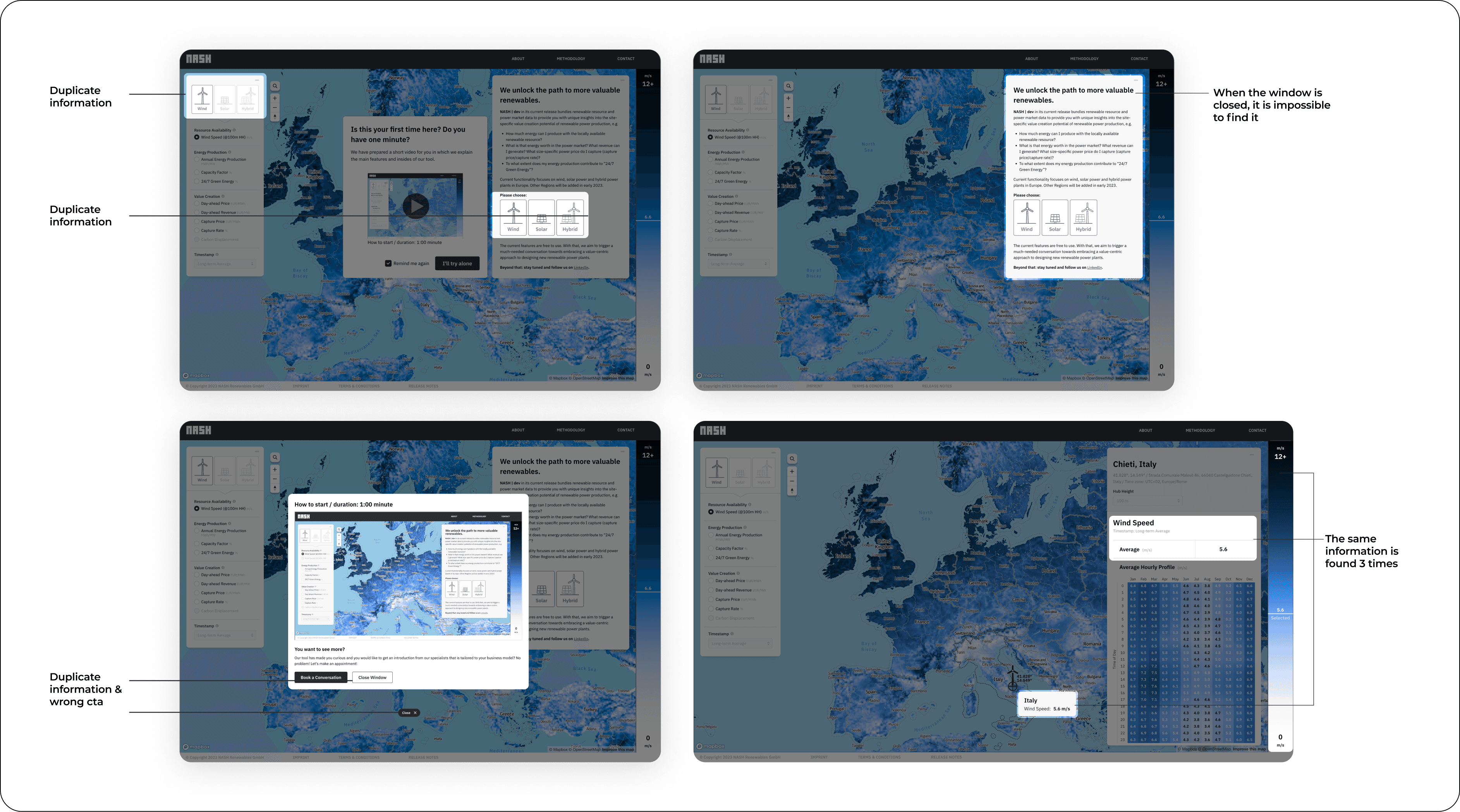
A UX audit is a method used to inspect the usability of a user interface. It involves evaluating the system’s ergonomics and the performance of its features.
In this case, we conducted a page-by-page analysis of all elements that lacked usability. We chose this approach because every page, and especially every overlay, differs depending on the interactions.
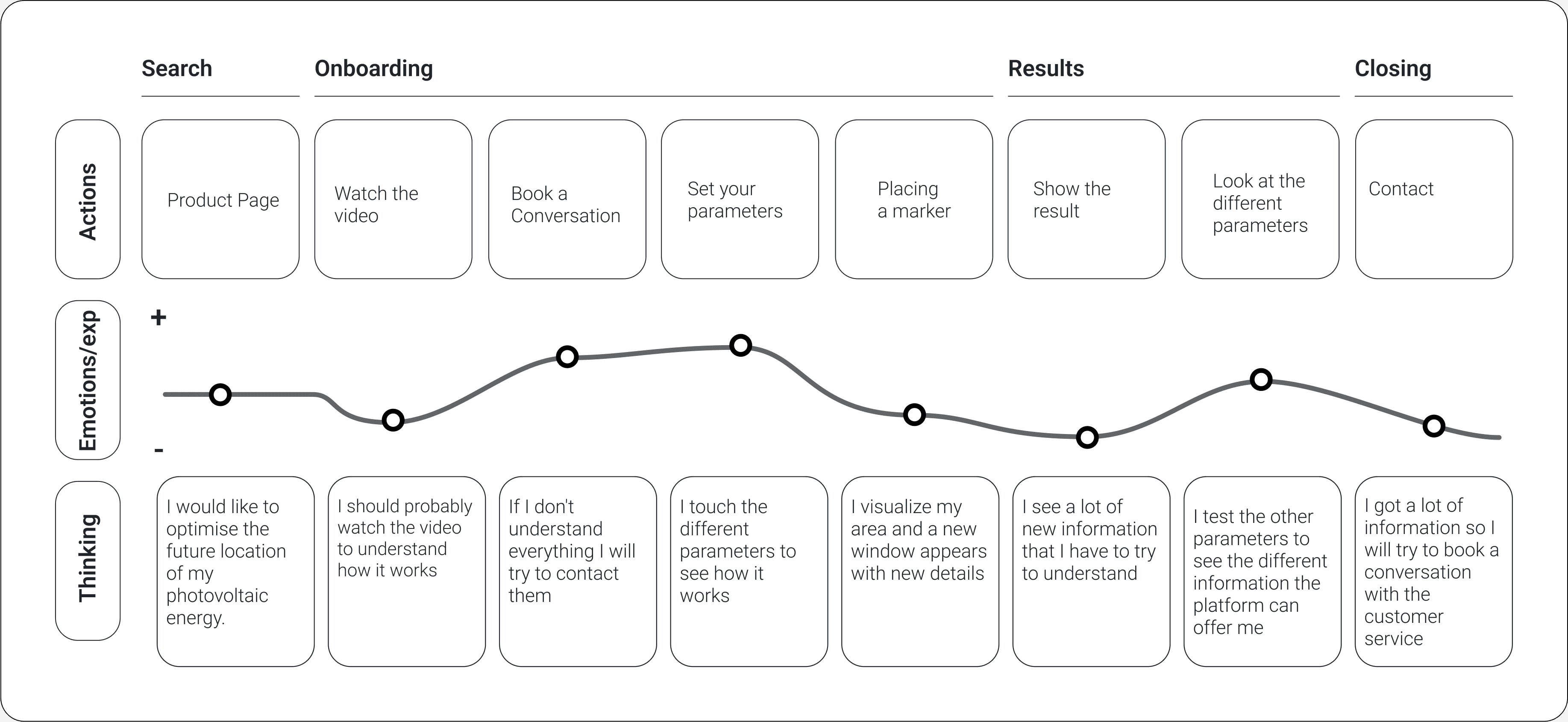
The experience map is the process of creating a step-by-step visual representation of the user’s journey. Its goal is to understand how users progress toward a specific objective.
In this case, we identified several pain points — these are the key elements that need to be improved to provide a better user experience.
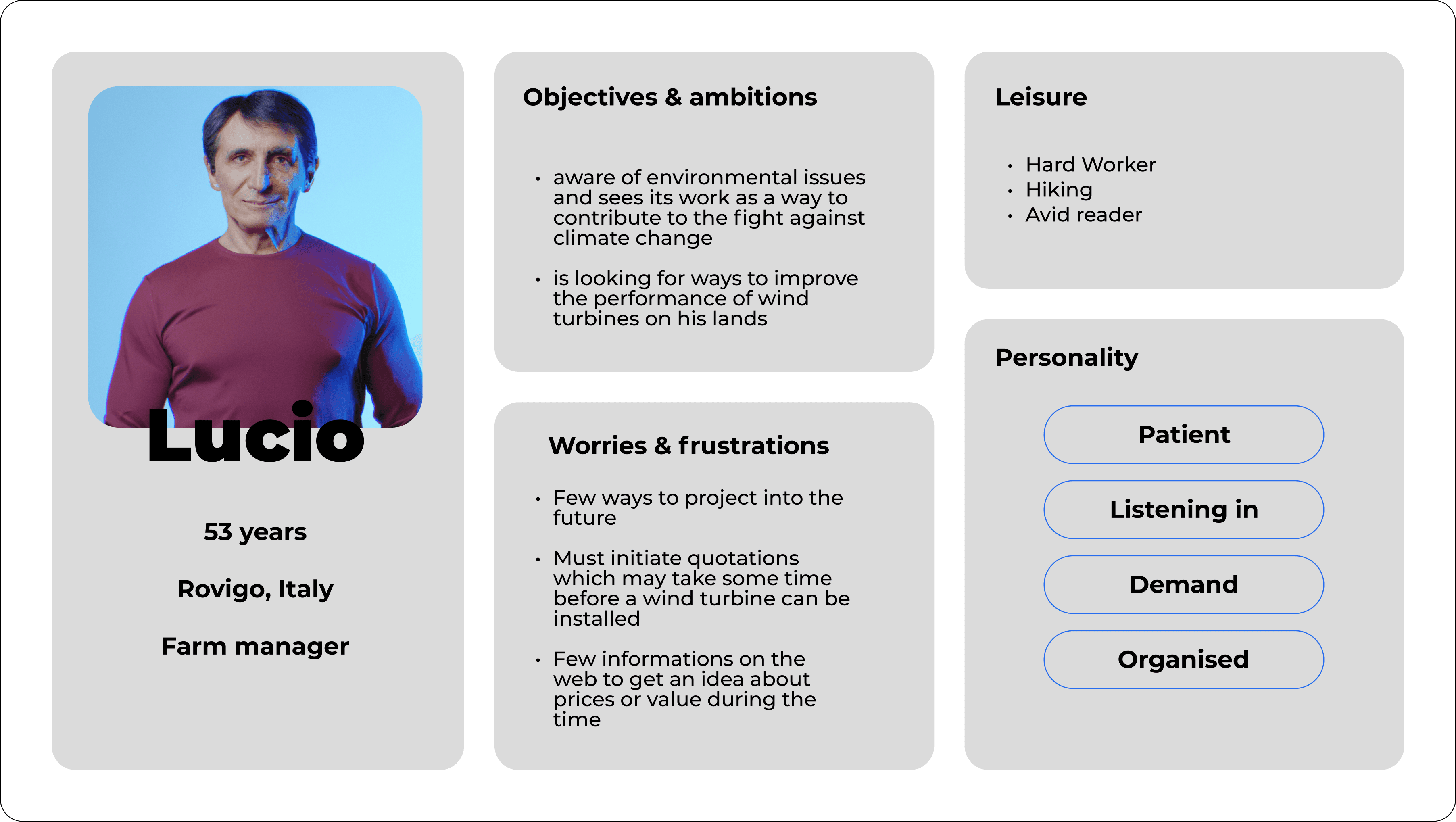
We then created a persona to better understand our target user.
This allows us to validate future decisions throughout the design process by checking whether they align with the needs and expectations of our target user.
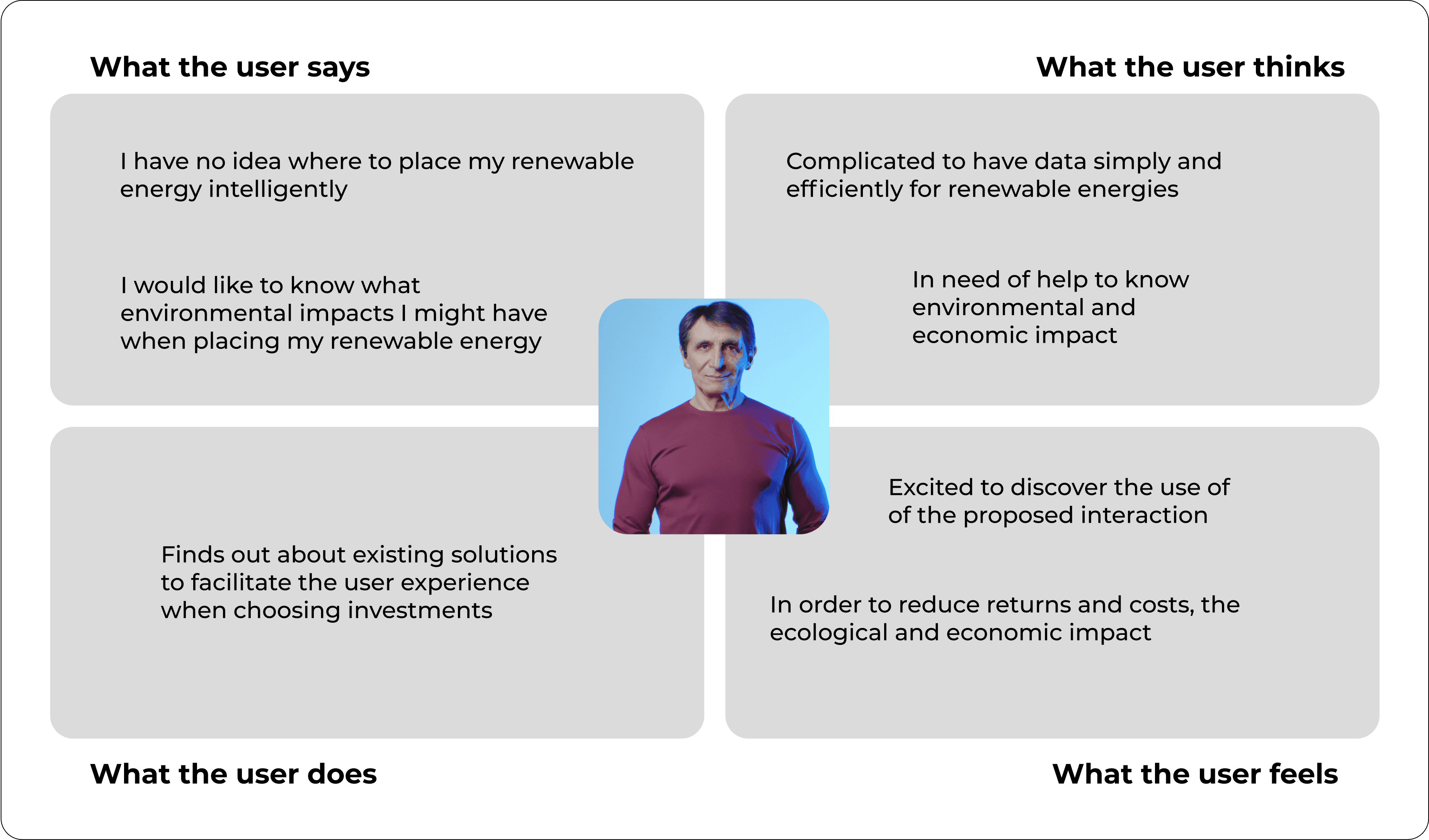
The empathy map aims to gain a deeper understanding of the users or customers of a product. It helps us adopt the perspective of the personas.
Therefore, as a continuation of the persona process, we created the empathy map for our target user.
UI process
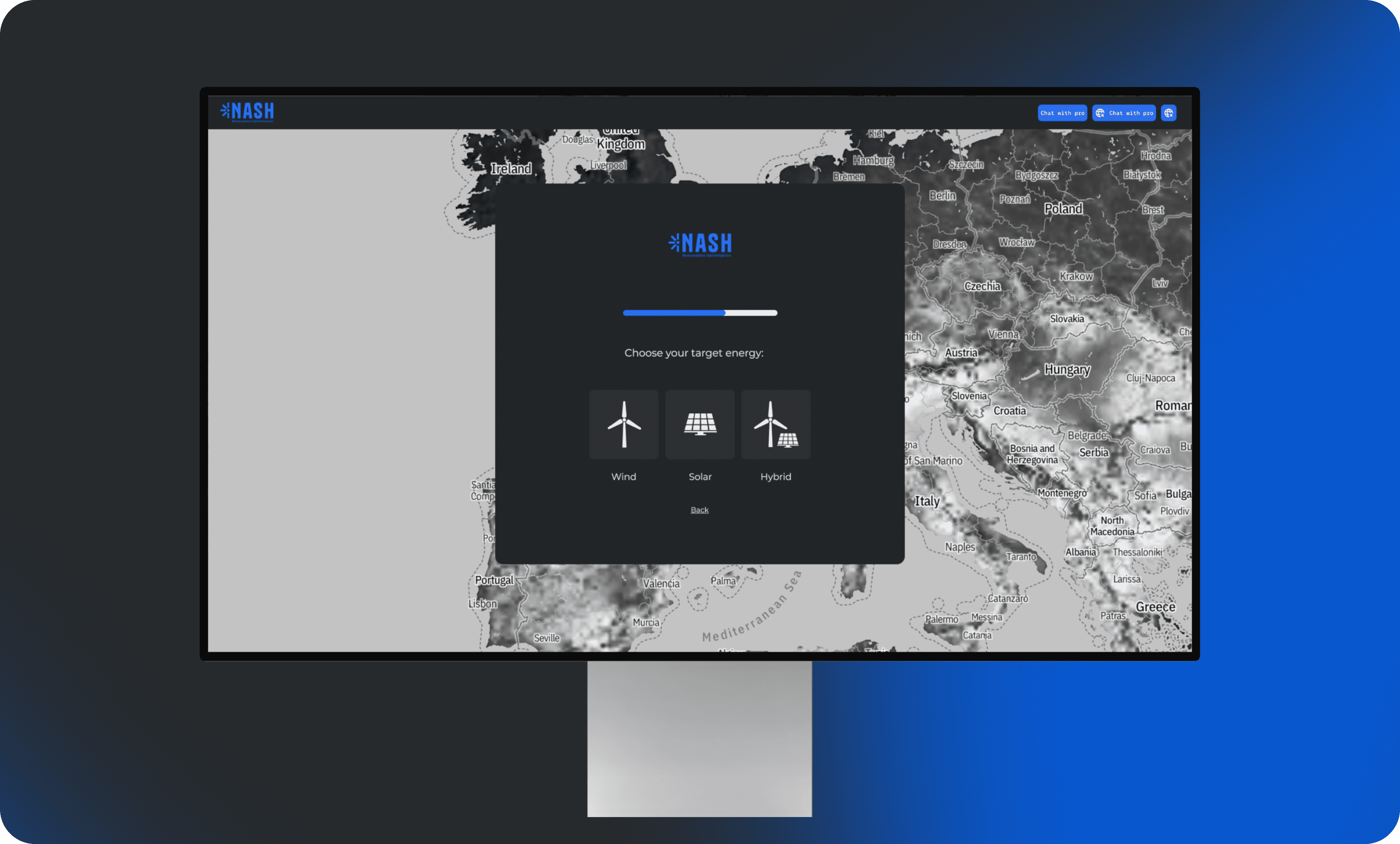
After proposing a redesign of their visual identity, we created UI interfaces for their tool as well as for the onboarding/tutorial experience.
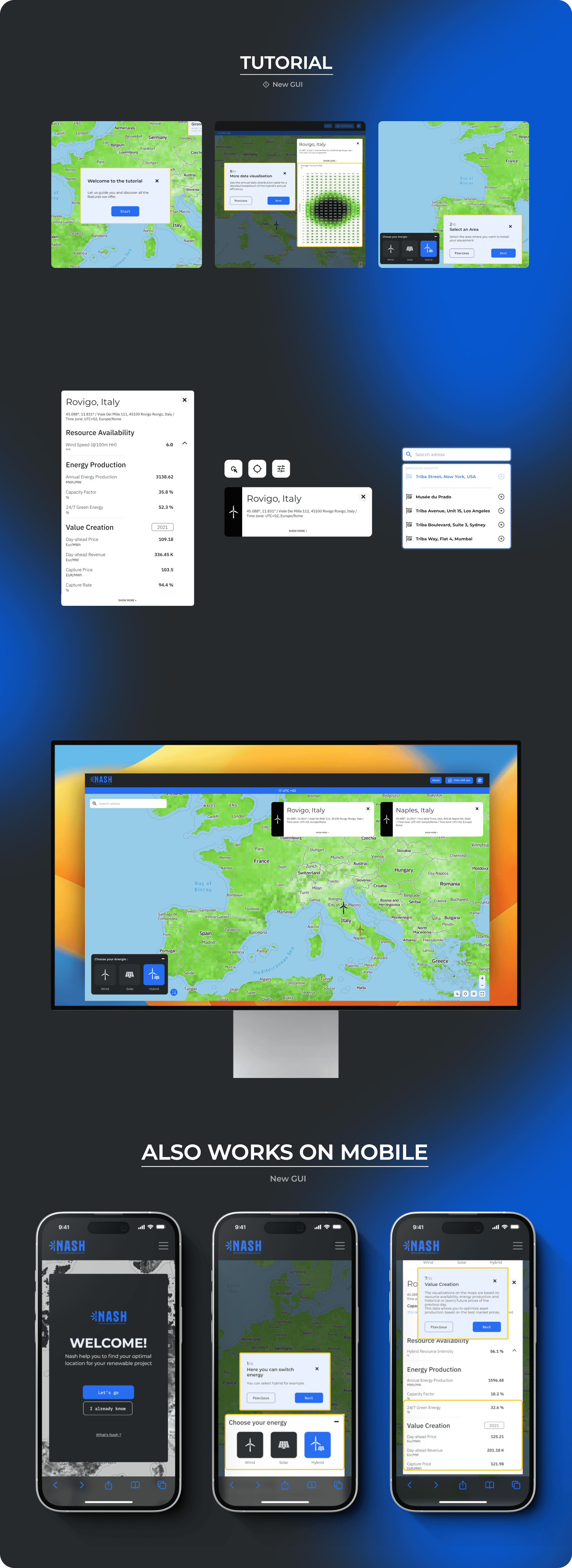
In this project, I was mainly responsible for designing the interface tutorial.
Right after the onboarding — where the user is asked to select the country they want to focus on and the type of energy they plan to implement — they are taken to a tutorial that introduces the tool’s features.
This tutorial uses overlays to highlight functionalities and guides the user to input the information they are looking for, so that by the end of the tutorial, they can directly access the result they came to the platform for.
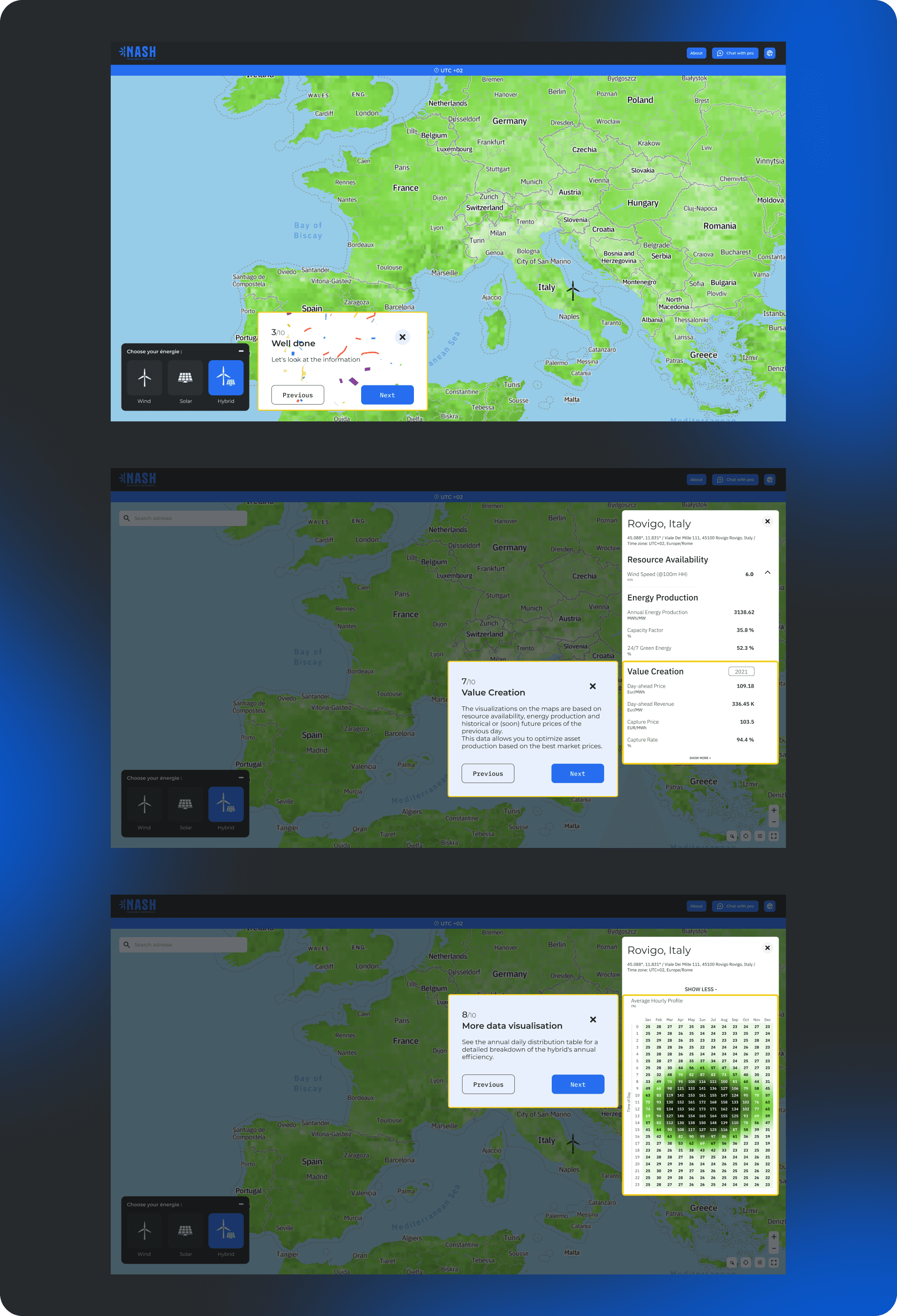
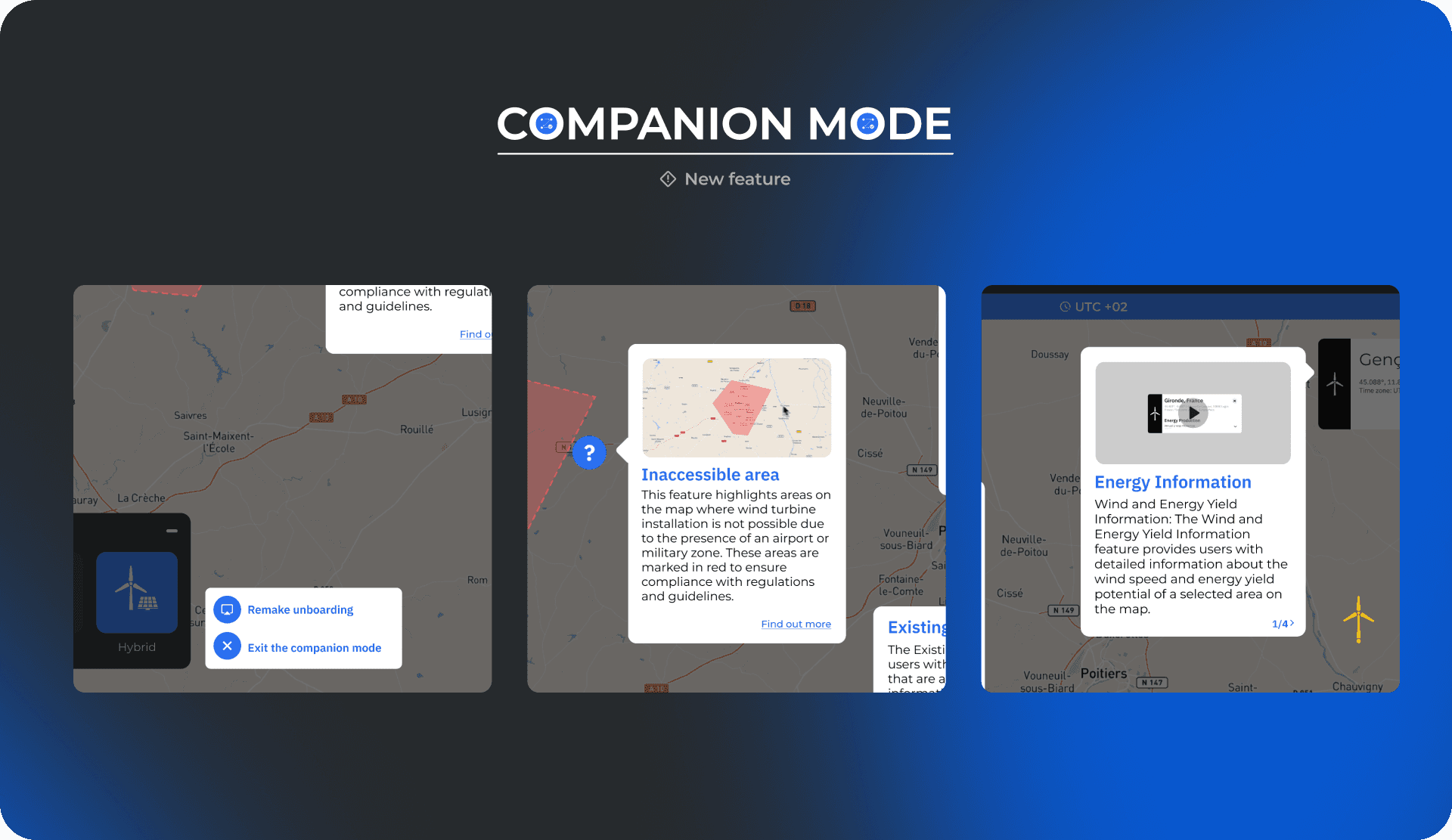
While working on the project, we identified an opportunity to add a small feature that would allow the user to access a summary of the tutorial at any time, displayed only through overlays.
This enables users to quickly revisit the key information about how the tool works, without having to go through the entire tutorial again.